The Abram Framework: Engineering Organic Attraction in a Fragmented Market
A strategic shift from high-friction outbound outreach to brand-led 'pull' models, addressing the 20-year lag in recruitment and the 45% productivity loss caused by tool fragmentation.
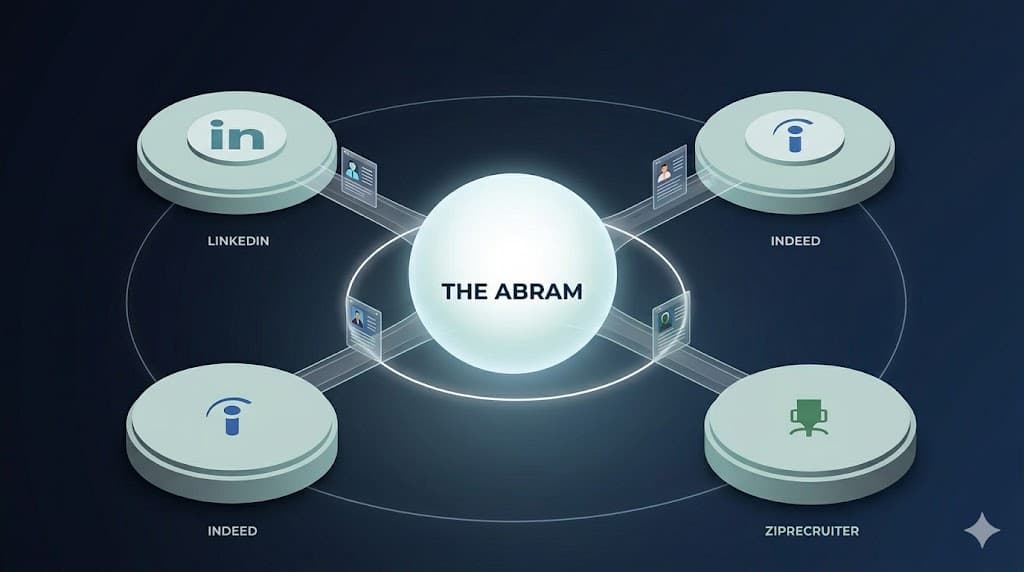
The Abram Framework: Engineering Organic Attraction and Architectural Consolidation in Modern Talent Acquisition
The current paradigm of talent acquisition is characterized by a fundamental strategic misalignment: a disproportionate reliance on high-friction outbound outreach at the expense of sustainable, brand-led inbound attraction. While the marketing industry underwent a radical transformation toward inbound methodologies over two decades ago, the talent acquisition sector remains largely tethered to legacy "push" models that are increasingly incompatible with the expectations of the modern workforce.1 This strategic deficit is compounded by a fragmented operational landscape where human resources professionals are forced to navigate a dizzying array of disconnected applications, incurring a measurable cognitive tax through context switching that degrades institutional productivity.4 To resolve these inefficiencies, organizations must transition toward a unified talent architecture—the "Abram Framework"—which prioritizes the creation of an organic attraction engine and a consolidated technology stack designed specifically for the high-engagement requirements of the candidate experience.6
The Strategic Imbalance: The High Cost of Outbound Dependency
The contemporary talent acquisition landscape is dominated by a labor-intensive sourcing model that prioritizes proactive outreach over passive attraction. While traditional outbound recruiting—manually identifying, evaluating, and contacting candidates—reaches the approximately 70% to 75% of the workforce that is not actively seeking employment, the manual effort required to sustain this pipeline is staggering.6 A single recruiter manually managing the outreach for a specialized role typically spends 15 to 20 hours on sourcing and hyper-personalized messaging alone.6 Despite this investment, traditional outreach often yields response rates as low as 10% to 15% when utilizing generic templates, creating a cycle of high effort and diminishing returns.6
This dependency on outreach is often a reaction to the failure of "post and pray" methodologies. Statistics indicate that while job boards and social media generate nearly half of all applications, they contribute less than 25% of actual hires.10 This discrepancy forces recruiting teams into a defensive posture, where they must aggressively source "top-tier" talent because the inbound funnel is clogged with unqualified leads.1 However, the economic reality of this approach is becoming unsustainable. US cost-per-hire averages $4,700 for standard roles and escalates beyond $28,000 for senior positions, while the time-to-fill continues to lengthen, with 60% of organizations reporting increases in 2024.11
| Metric Category | Outbound (Outreach) | Inbound (Attraction) |
|---|---|---|
| Market Reach | 75% Passive Market 6 | 25% Active Market 6 |
| Conversion Efficiency | 5x more likely to result in hire 10 | Higher brand trust and long-term ROI 7 |
| Time Investment | 15-20 hours per role 6 | Compound interest through content 13 |
| Financial Cost | High incremental cost per lead | 80% decrease in lead cost over 5 months 12 |
| Candidate Experience | Interruptive / Transactional 3 | Educational / Relationship-driven 7 |
The transition from a reactive, outreach-heavy model to an "Abram" attraction model is not merely a tactical shift but a fundamental re-engineering of the recruitment lifecycle. Inbound talent acquisition leverages content, employer branding, and search engine optimization to create a "magnet" for talent, ensuring that the organization remains visible to high-quality professionals even when they are not actively searching.7
The Abram Philosophy: Winding the Spring of Natural Attraction
The concept of an "Abram" that attracts talent naturally finds its most profound historical and philosophical precedent in the work of Abram Games, the 20th-century British graphic designer whose recruitment posters redefined the art of persuasion.17 Games, known for his "Maximum Meaning, Minimum Means" approach, famously stated that his goal was to "wind the spring" in the viewer's mind, so that the message would release its energy and drive action upon visual contact.17 In the context of modern talent acquisition, creating an "Abram" refers to the engineering of an employer brand so potent and clear that it creates a psychological "pull" on the talent market, eliminating the need for intrusive "push" outreach.17
The Mechanics of the Abram Framework
The Abram Framework for natural attraction is built upon three core pillars of signaling theory and human-centric design. First, it requires the distillation of the organizational mission into a singular, high-impact narrative that resonates with the professional identity of the target talent pool.17 Second, it utilizes non-transactional content—such as team stories, cultural documentaries, and industry thought leadership—to build trust before a job requisition even exists.13 Third, it ensures that the "brand experience" is consistent across all touchpoints, from the initial social media interaction to the final job offer.22
| Abram Principle | Design Application in Recruitment | Intended Psychological Outcome |
|---|---|---|
| Maximum Meaning | Clear, jargon-free Value Proposition (EVP) 19 | Immediate cognitive clarity for the candidate 21 |
| Minimum Means | Streamlined application and UX 18 | Reduced friction; high conversion 24 |
| Winding the Spring | Purpose-led storytelling (e.g., Patagonia) 27 | Intrinsic motivation to join the mission 17 |
| Signal Strength | Digital communication transparency 21 | High brand E-A-T (Expertise, Authority, Trust) 28 |
Organizations that successfully implement this framework, such as HubSpot or Canva, demonstrate that organic attraction is a compounding asset.14 HubSpot, whose founders reportedly coined the term "inbound marketing," has applied these same principles to its "Culture Code," attracting millions of visitors and high-quality applicants without traditional advertising.3 By "winding the spring" through radical transparency and educational content, these firms have moved the talent acquisition industry toward a future where the employer brand does the "heavy lifting" of sourcing.1
The Twenty-Year Lag: Why Recruiting Stays in the Outbound Era
The assertion that the talent industry is two decades behind the marketing industry is supported by a historical analysis of methodology shifts. Marketing entered its "Inbound Era" in the mid-2000s, catalyzed by the realization that consumers were increasingly adept at blocking out interruptive advertisements.2 By 2005, tools like Google Analytics and personalized search began to prioritize user experience and relevance over mass outreach.2 In contrast, the recruiting industry remained entrenched in the "Post and Pray" model of the late 1990s well into the 2010s, only recently beginning to experiment with the content-driven nurturing cycles that have been standard in B2B sales for nearly 20 years.1
The lag is primarily due to the historical power dynamic in the labor market. For most of the 20th century, employers held the leverage, and the recruitment process was designed as a filtration system rather than an attraction system.29 Candidates were expected to "wait in line" for interviews and follow-ups.29 However, the rise of the digital economy and the specialized skills shortage have "put the shoe on the other foot," turning companies into seekers rather than the sought-after.29 Older organizations often struggle with this shift, clinging to "smile and dial" outreach techniques that mirror the "cold calling" marketing strategies that Peter Drucker warned against as far back as the 1970s.1
| Milestone Year | Marketing Industry Evolution | Recruitment Industry Evolution |
|---|---|---|
| 1995 | Launch of first search engines 3 | Traditional print ads move to job sites 1 |
| 2000 | PPC and SEO take root 3 | Dot-com bubble bursts; focus on active candidates 2 |
| 2005 | HubSpot and Inbound Methodology launch 3 | "Post and Pray" remains the dominant strategy 1 |
| 2012 | Content marketing becomes standard 2 | Early adoption of LinkedIn for outreach 1 |
| 2020+ | AI-driven personalization and community 3 | Shift toward Inbound Talent/Employer Brand 22 |
This 20-year lag represents a massive lost opportunity in efficiency. Content marketing is documented to cost 62% less than traditional outreach while generating triple the number of leads.15 Furthermore, companies that prioritize a "candidate-centric" inbound approach are significantly more likely to hire talent that aligns with their culture, as the inbound process allows for natural self-selection; candidates spend more time engaging with the brand's values before applying.7
The Operational Crisis: The Cognitive Tax of Application Fragmentation
The second critical failure in modern talent acquisition is the technological fragmentation of the HR pipeline. Recruiters and HR professionals are frequently "bouncing between too many different applications," a process that severely slows down operations and introduces systemic errors.4 This "digital wild goose chase" is not merely an inconvenience; it is a significant drain on organizational resources.4
Quantitative Impact of Context Switching
Data from enterprise-scale studies indicates that knowledge workers switch between apps and websites around 1,200 times per day.5 Each of these "micro-switches" requires the brain to recalibrate for a new interface and navigation cue, leading to a state known as "attention residue".5
| Metric | Impact of Tool Overload and Context Switching |
|---|---|
| Time Loss | 2.5 workweeks lost per year per employee due to tool fatigue 33 |
| Productivity Decline | Up to 45% reduction in overall output 31 |
| Decision Lag | 23 minutes required to return to "deep work" after an interruption 32 |
| Cognitive Cost | 10-point drop in IQ (equivalent to missing a night of sleep) 32 |
| Error Rate | Increased likelihood of human error in sensitive data entry 4 |
For HR departments, this fragmentation means that a recruiter may be sourcing on a professional network, scoring in a standalone AI tool, communicating in a separate messaging app, and managing interview schedules in a calendar application.4 This lack of integration leads to "response selection bottlenecks," where the brain's focus narrows to immediate, low-value tasks like responding to emails rather than strategic talent evaluation.32 Furthermore, when systems do not communicate, workers must manually move data between platforms, leading to sync errors that often go unnoticed until payroll or onboarding begins.8
Systems Architecture: The Talent System vs. the HRIS
To mitigate the effects of tool fatigue, the user query proposes a specific architectural separation: keeping the talent management portion within one system while maintaining the HRIS as a separate entity. This model recognizes that the "standard of care" required for talent acquisition is fundamentally different from the administrative requirements of core HR.8
The Argument for Separation Based on "Standard of Care"
The HRIS is traditionally a system of record—a "digital backbone" designed for data management, payroll, compliance, and benefits.36 Its primary objective is administrative efficiency for current employees.36 In contrast, a Talent Management System (TMS) or a high-performance Applicant Tracking System (ATS) must function as a system of engagement.15 Candidates are effectively consumers of the employer brand, and they expect a user experience that mirrors high-end retail or consumer software.24
| Feature Comparison | HRIS / HCM | Talent System (TMS/ATS) |
|---|---|---|
| Primary Objective | Record-keeping and Compliance 35 | Engagement and Conversion 38 |
| Primary User Base | Internal Employees and Managers | External Candidates and Recruiters |
| UX Priority | Functional / Administrative | High-Touch / Mobile-Optimized 15 |
| Data Nature | Static / Transactional (e.g., Tax ID) | Dynamic / Relationship-based (e.g., Skills) |
| Standard of Care | Standardized Administrative Support | Personalized Brand Experience 24 |
The talent system must accommodate a "higher standard of care" because, unlike employees who are bound by contract, candidates can disengage at any moment due to a poor user interface or lack of feedback.25 Studies on enterprise software show that legacy HRIS modules for recruiting often have poor user experience ratings (e.g., Workday’s recruiting module rating of 3.19/5), forcing users to spend 45 minutes on tasks that should take five.25 By keeping everything from initial engagement to the offer stage within a unified talent system, the organization ensures a seamless, high-velocity journey for the candidate, while shielding them from the clunky administrative interface of a standard HRIS.8
The Integration Mandate: Closing the Handoff Gap
While the talent system and HRIS should remain distinct to preserve their specialized functions, the transition between them—the onboarding phase—must be perfectly integrated to prevent the "lost candidate context" that plagues fragmented HR departments.8 The "talent system" should encompass engagement, filtering, interviewing, and the offer process.42 The user query suggests that only the onboarding section might be in a different application, but even then, the data transfer must be automatic and comprehensive.8
Friction Points in the Recruitment-to-Onboarding Handoff
When the handoff from a recruitment system to an HRIS is managed poorly, several operational risks emerge:
- Manual Data Re-entry: HR teams are forced to manually re-key candidate details into the payroll and benefits modules, a process prone to errors.8
- Loss of Context: Critical information gathered during the interview process (e.g., specialized skills, career aspirations, or cultural fit notes) is often lost if it is not carried over to the employee's permanent profile.8
- Onboarding Delays: Weak integrations cause "silent sync failures," leading to delays in IT provisioning and payroll enrollment, which frustrates new hires and reduces their initial productivity.8
To maximize efficiency, modern organizations are moving toward integrated HCM (Human Capital Management) platforms that treat the candidate-to-employee journey as a single lifecycle.35 However, if an organization chooses a "best-of-breed" talent system, it must utilize robust API integrations to ensure that the moment an offer is accepted, the candidate’s profile "promotes" to employee status without human intervention.34
Case Studies in Organic Attraction: The "Abram" in Action
The shift from outreach to inbound attraction is best illustrated by organizations that have built "educational ecosystems" rather than simple job boards.
1. HubSpot: The Authority-Driven Engine
HubSpot manages over 8 million monthly organic visitors through a "pillar content" model.14 By positioning themselves as an authoritative source of marketing knowledge, they attract individuals who are already seeking to improve their skills.14 This results in a talent pipeline that is not only high in volume but pre-educated on the company’s core philosophies, significantly reducing the "conversion" time once a role becomes available.7
2. Patagonia: Mission-Led Attraction
Patagonia utilizes high-quality, long-form documentary content related to environmental sustainability.27 This strategy "sells their mission as much as their products".28 For recruitment, this means the brand acts as a filter; individuals who apply are already "wound springs" aligned with the company’s environmental worldview.17 This organic alignment reduces the need for extensive cultural screening during the interview process.7
3. Canva: Educational Empowerment
Canva entered a market dominated by complex professional tools and differentiated itself by building an educational ecosystem for non-designers.14 Their blog generates over 40 million monthly visits by solving immediate user problems.14 This creates a massive pool of brand advocates who view the company as a partner in their personal and professional growth, creating a "natural attraction" that makes traditional outreach unnecessary.14
The Future of Recruiting Automation: Beyond the Sourcing Bot
As we look toward 2026, the role of AI in recruitment is shifting from "automating outreach" to "automating attraction and fit assessment".6 While AI agents can now handle the heavy lifting of multi-channel outreach across LinkedIn, email, and SMS, the real value of automation lies in its ability to manage the inbound flow.6 AI-driven chatbots can provide personalized, 24/7 engagement on career sites, matching anonymous visitors to existing profiles in the CRM and providing relevant content that moves them down the funnel.9
However, the "second most important thing" remains the elimination of tool-hopping.4 The future of RecTech is a unified, autonomous workspace where the recruiter’s primary interface is a single "command center" that integrates brand management, candidate engagement, and hiring workflows.6
Conclusion: Engineering the Integrated Talent Engine
The evidence suggests that the talent acquisition industry must undergo a structural and philosophical reboot. The traditional focus on outreach is a legacy of an era where information was scarce and employers held all the leverage. In the modern, "always-on" talent market, the most effective organizations will be those that function like modern marketing agencies: building brand equity, nurturing long-term relationships through content, and creating a "wound spring" of natural attraction through the Abram Framework.12
Simultaneously, the operational infrastructure of HR must be consolidated. The cognitive cost of context switching is too high to ignore, and the "standard of care" required for top-tier talent demands a technology stack that prioritizes engagement over mere record-keeping.4 By separating the talent system from the administrative HRIS—while maintaining a seamless, integrated handoff—organizations can provide the elite experience necessary to win the "war for talent" while maintaining the operational discipline required for enterprise-scale management.8 The era of "smile and dial" is over; the era of the brand-led, unified talent architecture has arrived.
Works cited
- How Recruiting Has Changed in the Past 20 Years, accessed April 26, 2026, https://blog.recruitingtoolbox.com/blog/how-recruiting-has-changed-in-past-20-years
- From Ink to Inbound: A History of Marketing - Online Programs from CSP Global - Concordia University, St. Paul, accessed April 26, 2026, https://online.csp.edu/resources/infographic/ink-to-inbound/
- The Evolution of Inbound Marketing | SmartBug Media®, accessed April 26, 2026, https://www.smartbugmedia.com/blog/the-evolution-of-inbound-marketing
- The Cost of Context Switching: Reduce Enterprise Distraction, accessed April 26, 2026, https://www.moveworks.com/us/en/resources/blog/the-real-cost-of-context-switching-in-the-enterprise
- How context switching hurts productivity – and puts your data at risk - Tresorit, accessed April 26, 2026, https://tresorit.com/blog/how-context-switching-hurts-productivity-and-puts-your-data-at-risk
- Inbound vs Outbound Recruiting: Which Strategy Works Better in ..., accessed April 26, 2026, https://www.goperfect.com/blog/inbound-vs-outbound-recruiting-which-strategy-works-better-in-2026
- Why the Future of Recruitment Is Inbound - SmartDreamers, accessed April 26, 2026, https://www.smartdreamers.com/blog/why-the-future-of-recruitment-is-inbound
- How an ATS-HRIS integration removes handoffs, errors, and rework., accessed April 26, 2026, https://recruitee.com/blog/ats-hris-integration
- 18 Recruitment Industry Trends for 2021 [UPDATED] - Digital Media Stream, accessed April 26, 2026, https://www.digitalmediastream.co.uk/blog/recruitment-industry-trends-2018
- 10 takeaways from the 2025 recruiting benchmarks report - Gem, accessed April 26, 2026, https://www.gem.com/blog/10-takeaways-from-the-2025-recruiting-benchmarks-report
- Recruitment Methods Statistics 2026: Data-Driven Hiring - SalesSo, accessed April 26, 2026, https://salesso.com/blog/recruitment-methods-statistics/
- Why Inbound Marketing is Essential for Recruitment Agencies - The Access Group, accessed April 26, 2026, https://www.theaccessgroup.com/en-gb/blog/rec-inbound-marketing-recruitment/
- What Recruitment Marketing Should Do When Hiring Slows - Rally ..., accessed April 26, 2026, https://rallyrecruitmentmarketing.com/2026/01/recruitment-marketing-during-slow-hiring/
- Content Marketing Case Studies: 10 Brands That Achieved Organic Growth Without Paid Ads | Hashmeta, accessed April 26, 2026, https://hashmeta.com/blog/content-marketing-case-studies-10-brands-that-achieved-organic-growth-without-paid-ads/
- What is Inbound Recruitment Marketing? - SmartDreamers, accessed April 26, 2026, https://www.smartdreamers.com/blog/what-is-inbound-recruitment-marketing
- Inbound recruiting: techniques, methodology and phases - SMOWL, accessed April 26, 2026, https://smowl.net/en/blog/inbound-recruiting-meaning/
- Abram Games - Wikipedia, accessed April 26, 2026, https://en.wikipedia.org/wiki/Abram_Games
- Abram Games - Overview - Ben Uri Gallery, accessed April 26, 2026, https://benuri.org/artists/46-abram-games/overview/
- Abram Games – an afternoon with Naomi Games, February 2024 - Tincture of Museum, accessed April 26, 2026, https://tinctureofmuseum.wordpress.com/2024/02/19/abram-games-an-afternoon-with-naomi-games-february-2024/
- Abram Games and the power of the poster - National Army Museum, accessed April 26, 2026, https://www.nam.ac.uk/explore/abram-games-designer
- (PDF) Communication as a Key Performance Indicator in Employer Branding in the Context of the Social Economy—A Quantitative Study - ResearchGate, accessed April 26, 2026, https://www.researchgate.net/publication/379676138_Communication_as_a_Key_Performance_Indicator_in_Employer_Branding_in_the_Context_of_the_Social_Economy-A_Quantitative_Study
- Inbound Recruiting or the art of attracting talent - Ringover, accessed April 26, 2026, https://www.ringover.com/blog/inbound-recruiting
- From Inbound Marketing to Inbound Talent: exploring motivational ..., accessed April 26, 2026, https://www.emerald.com/md/article/doi/10.1108/MD-04-2024-0862/1270405/From-Inbound-Marketing-to-Inbound-Talent-exploring
- What is user experience (UX) and how does it impact recruitment? - CleverConnect, accessed April 26, 2026, https://www.cleverconnect.com/glossaries/what-is-user-experience-ux-impact-recruitment
- Applicant Tracking System Buyers Guide for HR - HR Cloud, accessed April 26, 2026, https://www.hrcloud.com/blog/ats-buyers-guide
- Candidate Experience by Design: Applying UX to Recruiting & Hiring. - RecruitingDaily, accessed April 26, 2026, https://recruitingdaily.com/candidate-experience-by-design/
- 12 Incredible Organic Marketing Case Studies [2026] - DigitalDefynd Education, accessed April 26, 2026, https://digitaldefynd.com/IQ/organic-marketing-case-studies/
- Success Stories: How These Brands Thrived with Inbound Marketing - Ever Wonder, accessed April 26, 2026, https://www.ever-wonder.com/muse/success-stories-how-these-brands-thrived-with-inbound-marketing
- Reaching New Candidates Through Inbound Recruiting - The Network, accessed April 26, 2026, https://www.the-network.com/reaching-new-candidates-through-inbound-recruiting/
- Employee Experience Design: All HR Needs to Know - AIHR, accessed April 26, 2026, https://www.aihr.com/blog/employee-experience-design/
- How Job Site Technology Impacts Worker Productivity and Fatigue - Trueline, accessed April 26, 2026, https://wearetrueline.com/how-job-site-technology-impact-worker-productivity-and-fatigue/
- Context Switching: Why It's So Hard to Avoid & How to Prevent It Anyway - Todoist, accessed April 26, 2026, https://www.todoist.com/inspiration/context-switching
- Too Many Tools, Too Little Time: How Context Switching Is Killing Team Flow - Lokalise, accessed April 26, 2026, https://lokalise.com/blog/blog-tool-fatigue-productivity-report/
- HRIS Integration APIs: Connect HR Systems Like a Pro in 2026, accessed April 26, 2026, https://bindbee.dev/blog/guide-to-hris-integrations
- HRIS vs. HRMS vs. HCM—What's the Difference? | Oracle Australia and New Zealand, accessed April 26, 2026, https://www.oracle.com/anz/human-capital-management/hrms/hris-hrms-hcm/
- HCM vs HRIS vs HRMS: The Differences You Should Know - Paycor, accessed April 26, 2026, https://www.paycor.com/resource-center/articles/hcm-vs-hris-vs-hrms/
- HR, Payroll & Workforce Management Software for Healthcare - MHR, accessed April 26, 2026, https://mhrglobal.com/uk/en/who-we-serve/healthcare-hr-software
- HRIS vs HRMS: Key Differences, Features & Which One You Need in 2026 - Qandle, accessed April 26, 2026, https://www.qandle.com/blog/hris-vs-hrms-key-differences-best-choice-2026/
- Inbound Recruitment Playbook: Recruit The Best Candidates - Hubdew, accessed April 26, 2026, https://www.hubdew.com/blog/inbound-recruitment
- Connecting Your Candidate and Employee Experience for Better Results - Veremark, accessed April 26, 2026, https://www.veremark.com/blog/connecting-your-candidate-and-employee-experience-for-better-results
- 10 Benefits of Unified Workforce Management Software, accessed April 26, 2026, https://www.fuseworkforce.com/blog/10-benefits-of-unified-workforce-management-software
- Talent Management System: Strengthen Your Workforce - ELMO Software, accessed April 26, 2026, https://elmosoftware.com.au/resources/blog/7-benefits-of-having-a-talent-management-system
- Talent Management System: Definition, Benefits, and Key Elements, accessed April 26, 2026, https://www.talenta.co/en/blog/talent-management-system/
- Top 6 Benefits of Having a Talent Management System | Intalio, accessed April 26, 2026, https://intalio.com/blogs/top-6-benefits-of-having-a-talent-management-system
- Ensure a Smooth Transition With HR Tech Onboarding - Pulpstream, accessed April 26, 2026, https://pulpstream.com/resources/blog/hr-tech-onboarding
- Phenom AI Day: Tune in Now, accessed April 26, 2026, https://www.phenom.com/blog/phenom-ai-day-live
Ready to accelerate your growth?
Book a consultation to discuss how we can help implement these strategies.
Book a Session